Architectural Digest

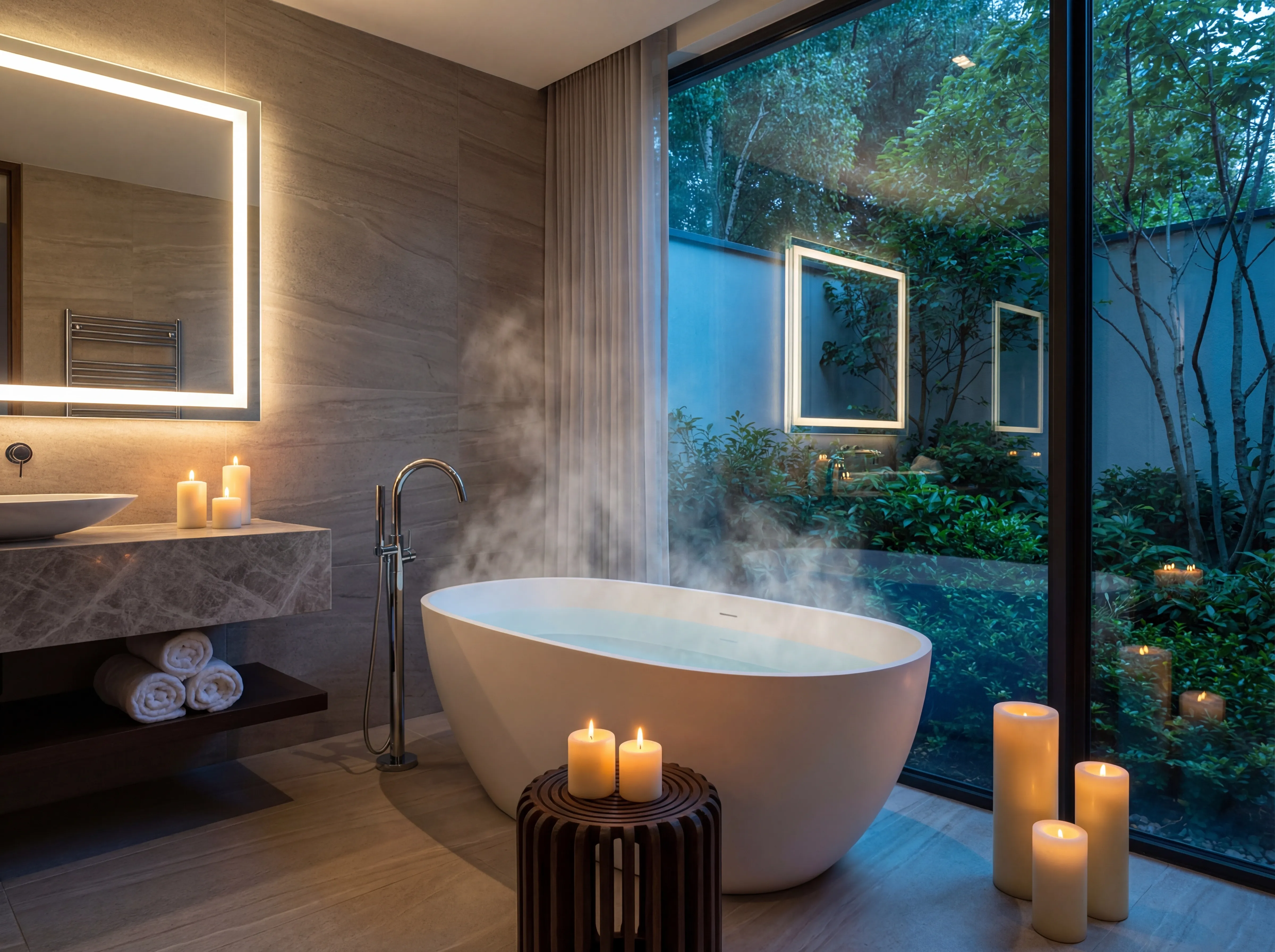
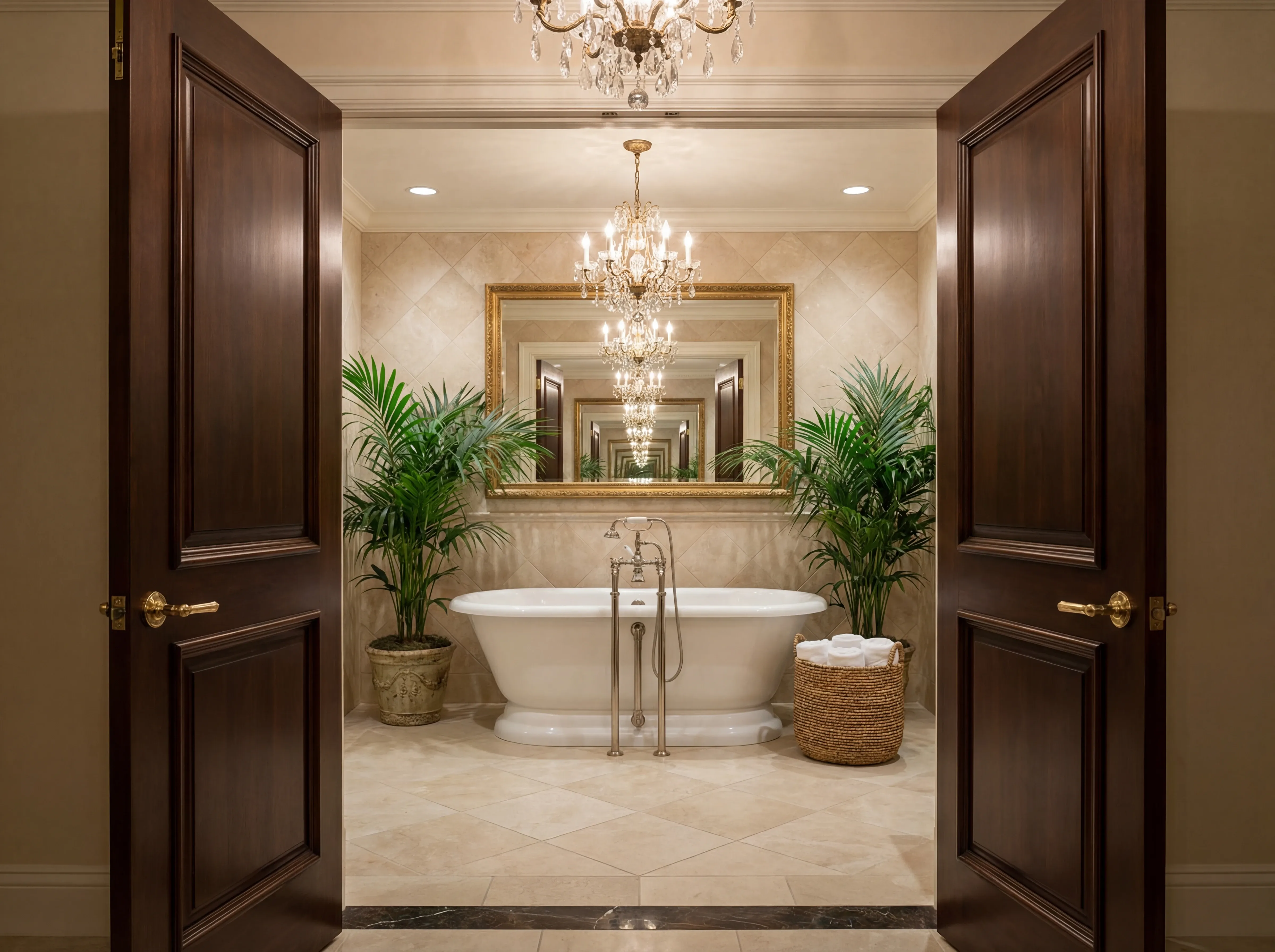
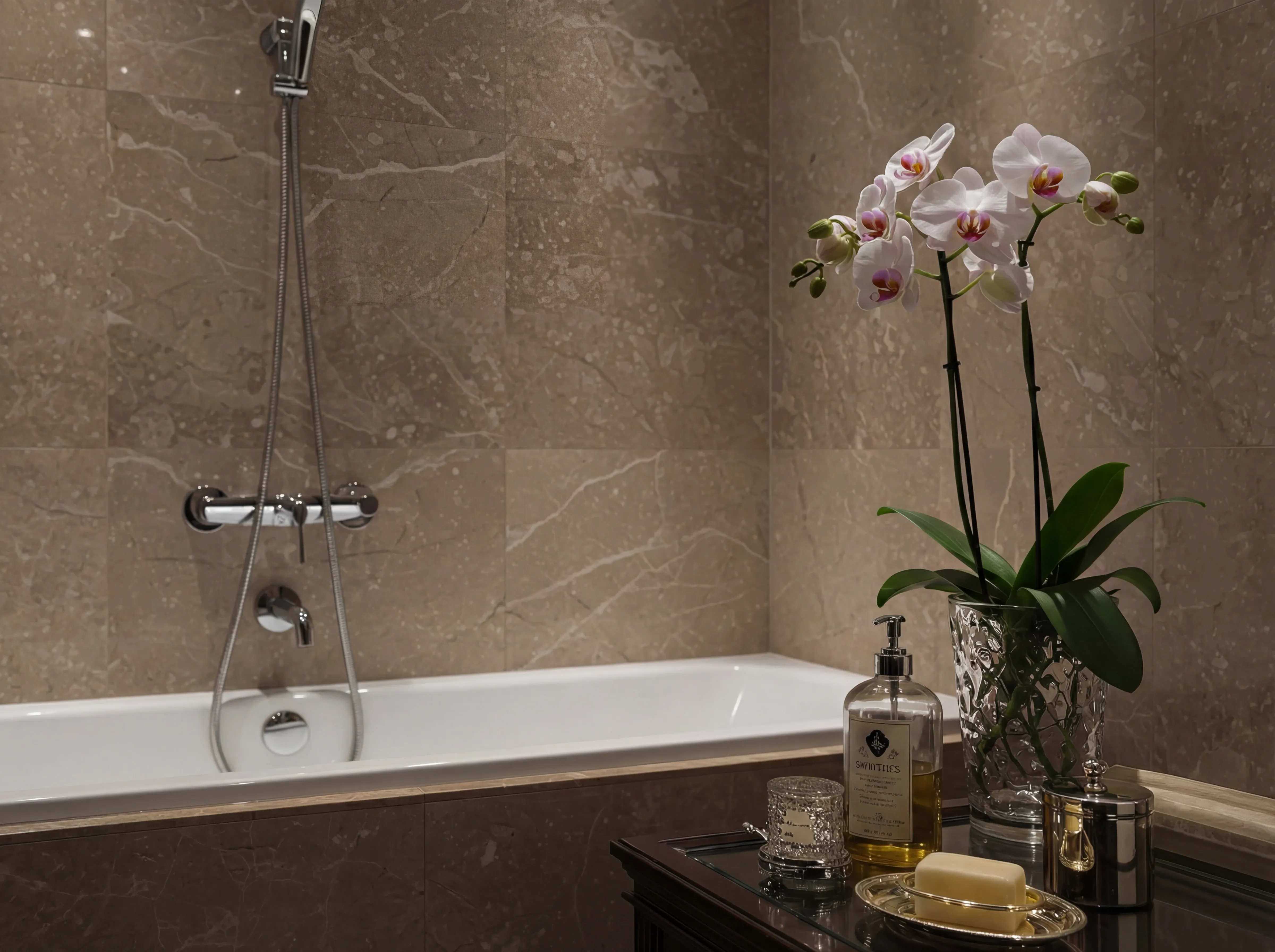
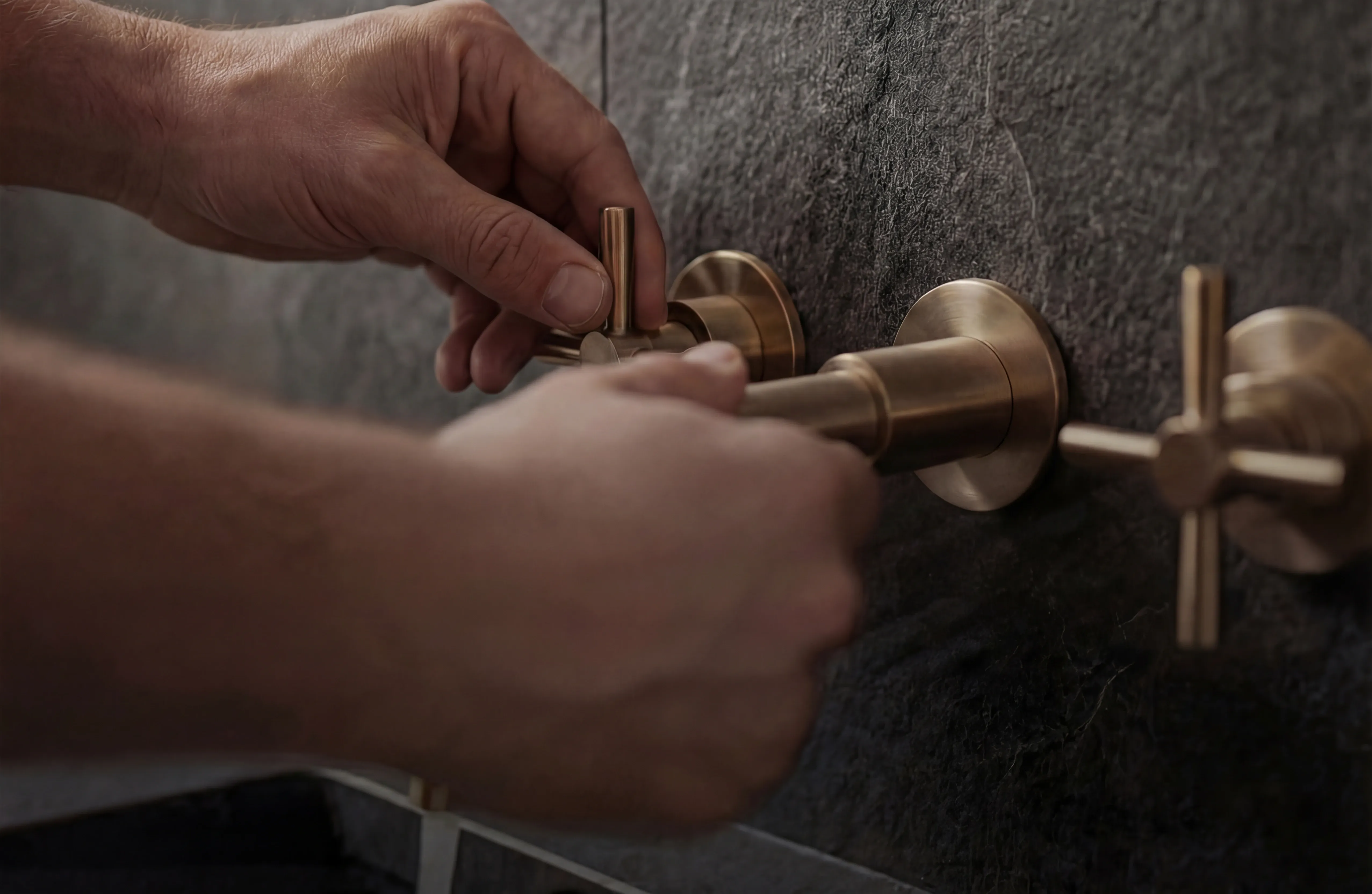
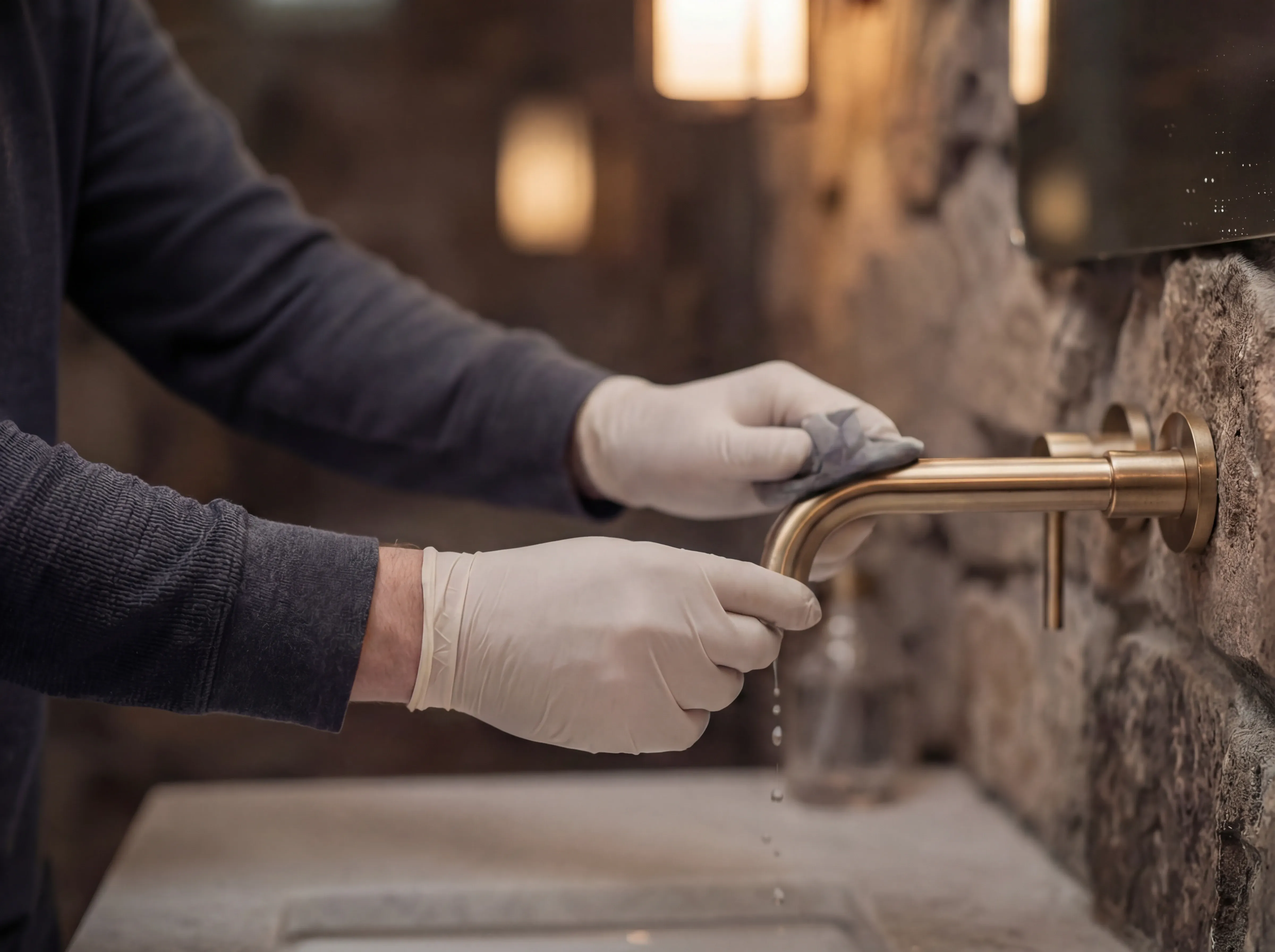
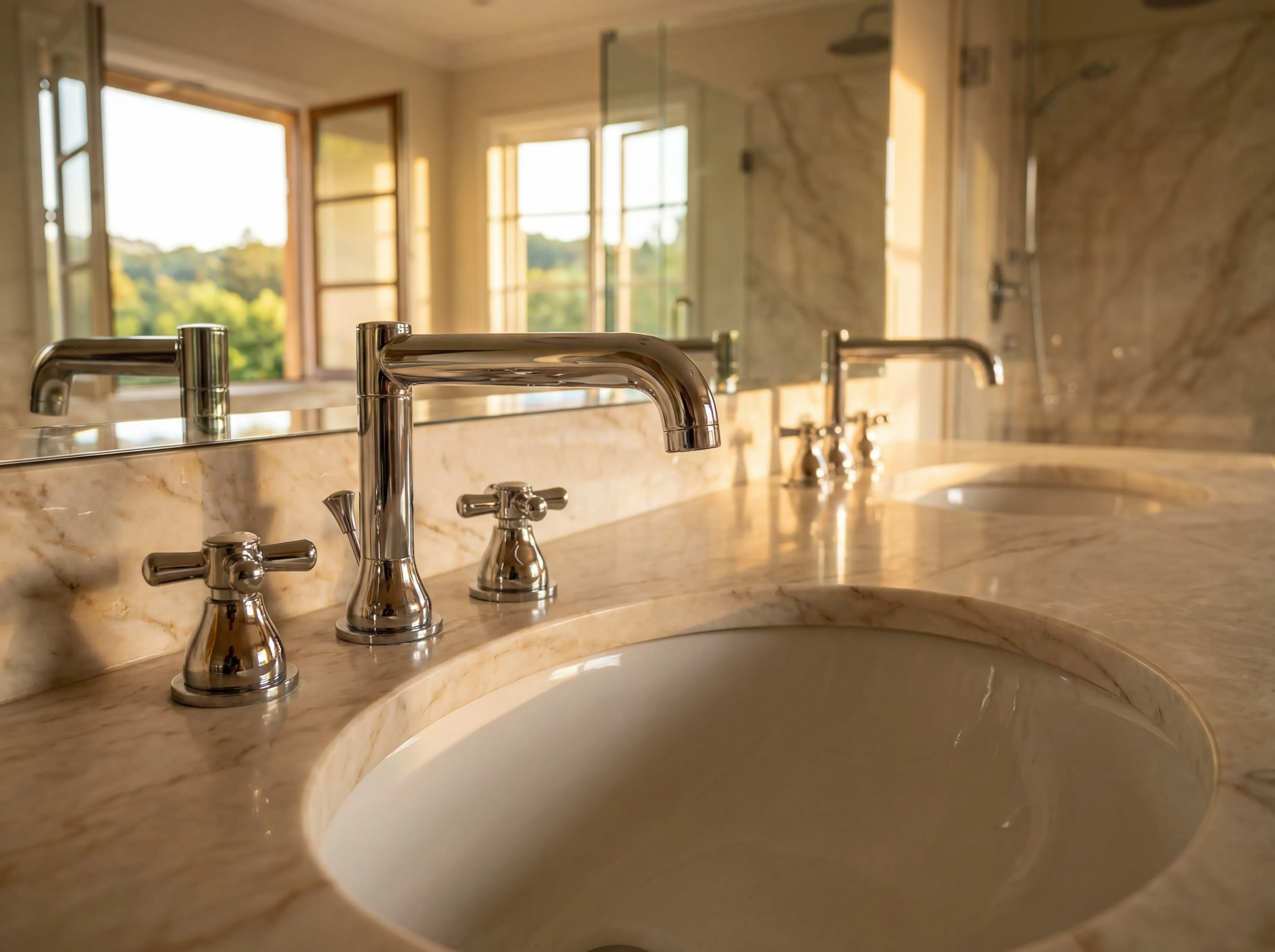
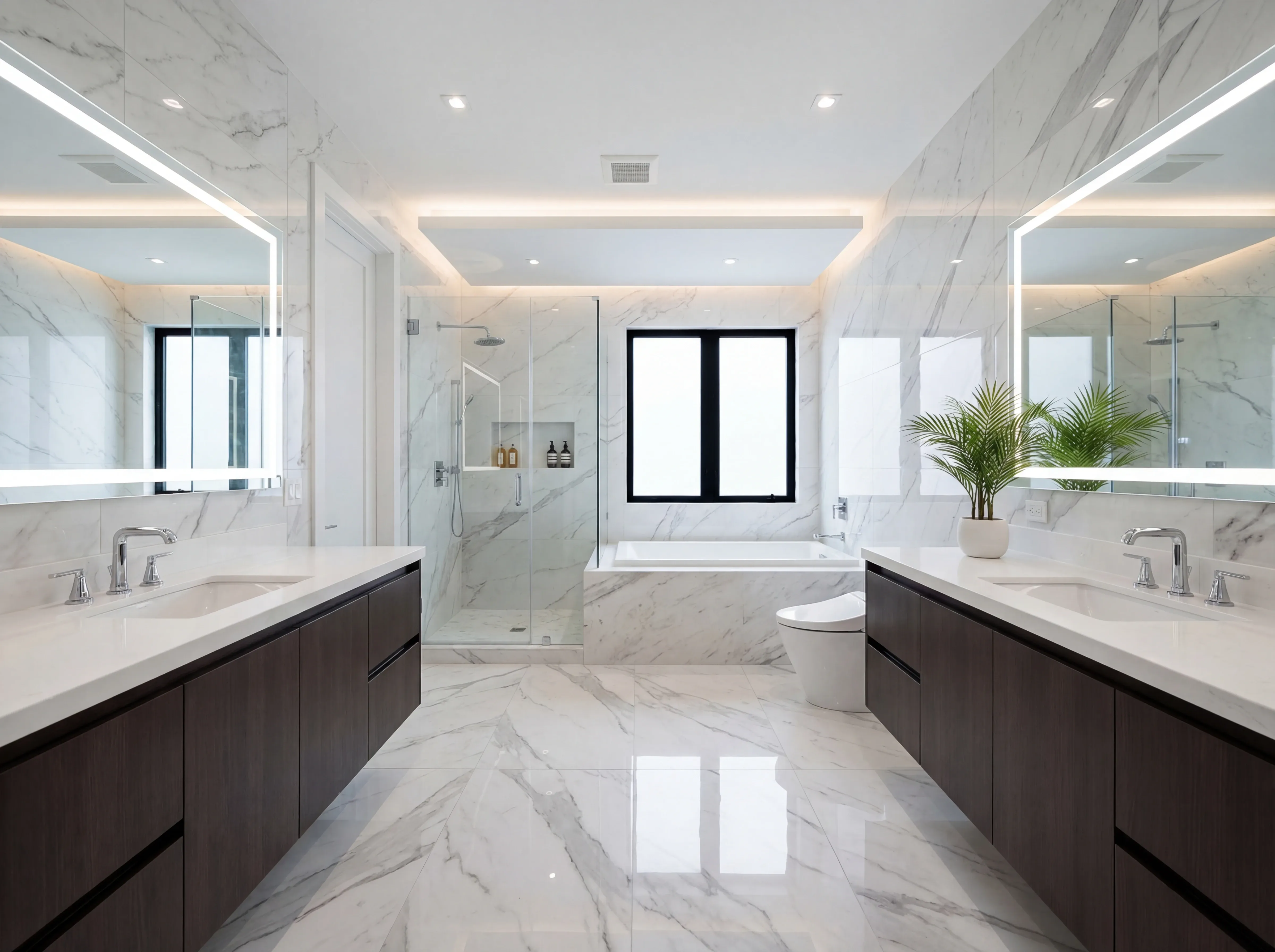
There was a time when a luxury bathroom meant marble countertops and gold-plated fixtures. That era is over. A new generation of designers is rewriting the vocabulary of high-end bath spaces, and BOMRA sits at the center of that conversation.
Founded with the conviction that bathrooms deserve the same creative rigor as any living space, BOMRA has spent years developing an approach that treats water, light, and stone as compositional elements rather than functional necessities. Their recent residential projects along the California coast demonstrate what happens when a firm refuses to separate engineering from artistry.
"We start every project by asking how the space should feel at six in the morning," says the studio's lead designer. "Not how it should look in a photograph — how it should feel when you're half awake and the light is just coming through." That philosophy produces rooms that photograph beautifully but, more importantly, function with an almost intuitive ease.
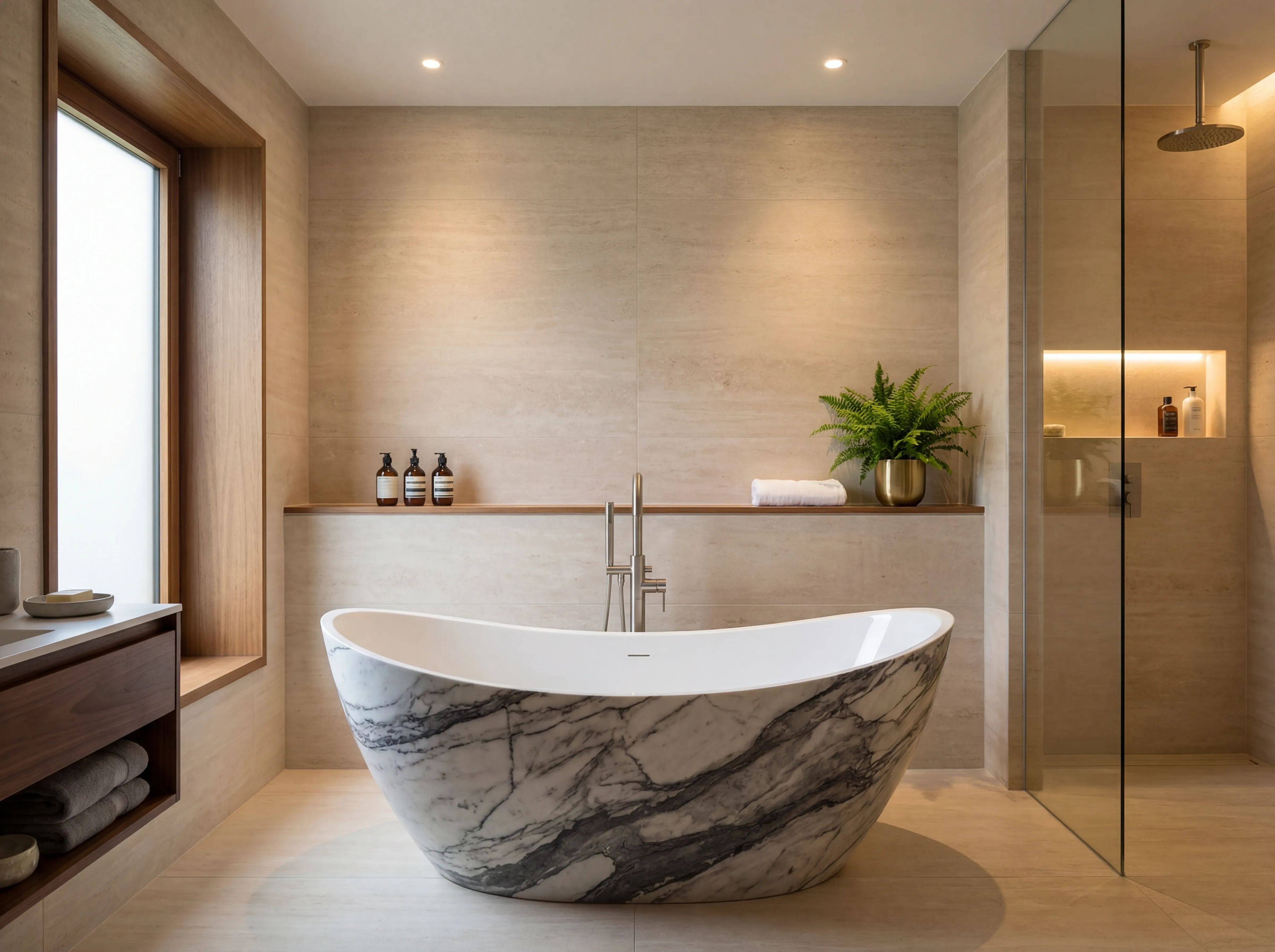
In a recently completed Paso Robles residence, BOMRA installed a freestanding soaking tub carved from a single block of Calacatta marble, positioned beneath a skylight calibrated to track the morning sun across the water's surface. The vanity, a cantilevered slab of honed basalt, appears to float against a wall of floor-to-ceiling fluted glass. Every joint is invisible. Every surface invites touch.
The material palette reflects a broader shift in luxury design: away from ostentation and toward sensory richness. Venetian plaster walls in a warm putty tone absorb sound and soften light. Heated limestone floors eliminate the shock of cold tile. Brass hardware, left unlacquered, develops a living patina that the firm considers part of the design rather than a flaw.
BOMRA's technical innovation is equally notable. Their proprietary waterproofing details allow them to eliminate visible thresholds between wet and dry zones, creating seamless stone floors that flow from shower to dressing area without interruption. Radiant heating systems are zoned to individual fixtures, so the floor beside the tub warms minutes before a scheduled bath.
The firm's influence extends beyond individual projects. Their published detail drawings for curbless shower construction have become reference standards among high-end contractors, and their material testing protocols — subjecting every stone sample to two hundred hours of steam exposure before specification — have raised expectations across the industry.
What distinguishes BOMRA from peers working at similar price points is restraint. Where others layer complexity, BOMRA subtracts. A powder room might contain just three materials: hand-troweled lime plaster, a single slab of book-matched onyx, and brushed nickel. The effect is not minimal but concentrated — every element carries weight because nothing competes for attention.
As residential clients increasingly treat bathrooms as private sanctuaries rather than utilitarian rooms, firms like BOMRA are proving that the most luxurious thing a space can offer is not spectacle but presence — the quiet authority of a room designed with absolute intention.
The wellness movement has migrated from boutique spas to private residences, and the bathrooms emerging from this shift bear little resemblance to the clinical wet rooms of a decade ago. At the forefront of this evolution is BOMRA, a California studio whose projects blur the boundary between domestic architecture and therapeutic environment.
Their latest commission, a primary bath suite in a hillside estate overlooking vineyards, reads more like a destination spa than a residential room. A steam chamber lined in hand-cut zellige tile adjoins a cold plunge pool fed by a recirculating system that maintains water temperature within half a degree. Between them, a heated stone bench — carved from a single piece of travertine — provides a transition zone where the body adjusts between extremes.
"We design for the full thermal cycle," explains the project's lead. "Heat, cold, rest, repeat. The architecture has to support that rhythm without making you think about doors or drains or where to put your towel."
The attention to invisible infrastructure is what separates BOMRA's wellness spaces from decorative imitations. Ventilation systems are engineered to clear steam in under ninety seconds without creating drafts. Lighting shifts automatically through the day, from energizing cool tones at dawn to warm amber by evening, controlled by circadian sensors embedded in the ceiling. Sound is managed with the same precision: acoustic panels hidden behind perforated stone walls reduce reverberation to the level of a recording studio.
Material choices reinforce the therapeutic intent. Teak decking in wet zones provides warmth and grip without the institutional feel of textured tile. Walls of rammed earth — an ancient technique BOMRA has adapted for high-moisture environments using a proprietary mineral sealant — regulate humidity naturally while adding visual depth through their layered, geological texture.
The firm's approach to fixtures reflects a philosophy of reduction. Rather than installing arrays of body jets and rain heads, BOMRA typically specifies a single, oversized showerhead — often custom-fabricated in solid brass — paired with a handheld wand. "Most people use two settings," the designer notes. "We'd rather perfect those two than offer twelve mediocre options."
Fragrance is integrated architecturally. Small niches in the steam chamber hold sachets of dried eucalyptus and lavender, and the ventilation system can diffuse essential oils at programmed intervals. It is a level of sensory design that most residential projects never consider.
The result is a space that doesn't just look like wellness — it performs it. Clients report measurable improvements in sleep quality and stress levels, outcomes the firm tracks through optional post-occupancy surveys. For BOMRA, the bathroom is not a room to be decorated but a system to be calibrated, and the measure of success is not how it photographs but how it makes you feel at the end of a long day.
In the world of high-end bathroom design, there is a persistent tension between the sculptural and the practical. A freestanding tub can be a work of art, but it still needs to drain. A floating vanity can defy gravity, but it must hold weight. BOMRA has built its reputation on resolving this tension so completely that the seams disappear.
The studio's recent work for a contemporary art collector in San Luis Obispo illustrates the point. The primary bathroom centers on a custom bathtub — not purchased from a catalog but sculpted in collaboration with a local stone fabricator over four months. Hewn from a two-ton block of Portuguese limestone, the tub's exterior retains the rough, chiseled texture of quarried rock while its interior curves into a polished basin so smooth it feels like touching water.
"We wanted the tub to feel like it was discovered, not manufactured," says the designer. "Like something geological that happened to be exactly the right shape for bathing."
The engineering required to achieve this effect is considerable. The tub weighs over eight hundred pounds empty and required structural reinforcement of the floor system below. Drainage is concealed within the stone itself, channeled through a slot cut into the tub's lip that feeds into a hidden waste line. There is no visible drain, no chrome plug, no interruption of the stone's surface.
This commitment to concealment defines BOMRA's aesthetic. In the same project, the shower enclosure uses frameless glass panels bonded directly to stone walls with structural silicone — no metal channels, no visible hardware. Water controls are integrated into a recessed niche that reads as a simple rectangular void in the wall. The showerhead emerges from the ceiling through a precision-cut opening in the plaster, its supply line buried in the structure above.
The vanity continues the theme. A single slab of honed Nero Marquina marble, three inches thick, cantilevers from the wall on concealed steel brackets rated for three times its weight. The basin is carved directly into the slab — a shallow, asymmetric depression that guides water toward an integrated slot drain at the rear. Beneath, a single open shelf in oiled walnut provides the only visible storage.
Lighting is equally considered. Rather than conventional fixtures, BOMRA specified a continuous LED channel recessed into the ceiling perimeter, washing the walls with even, shadowless light. A second channel, hidden beneath the vanity's leading edge, casts a soft glow downward onto the floor, creating the impression that the marble slab is luminous.
The material palette — limestone, marble, walnut, brushed brass — is deliberately restrained. "When every element is sculptural, you need fewer of them," the designer explains. "The room breathes because there's space between the gestures."
For BOMRA, the sculptural bathroom is not about dramatic form for its own sake. It is about elevating functional objects to the level of craft, so that the act of bathing becomes an encounter with something made with extraordinary care.
The ultra-luxury residential market has always rewarded excess — more square footage, more amenities, more visible expense. But a quiet counter-movement is emerging among the most discerning clients, one that values precision over scale and sensory experience over spectacle. BOMRA, a boutique design studio based in California's Central Coast, has become the firm of choice for this new clientele.
Their portfolio reads like a map of California's most coveted addresses, but the work itself resists the region's tendency toward indoor-outdoor grandeur. BOMRA's bathrooms are intimate, inward-looking spaces — rooms designed to shut out the world rather than frame it.
A recently completed project in a Montecito estate exemplifies the approach. The primary bath suite occupies just under three hundred square feet — modest by the standards of a twelve-thousand-square-foot home — but every inch has been considered with a density of thought usually reserved for museum installations. The floor is a single pour of micro-cement, tinted to match the surrounding sandstone hills and heated to a constant seventy-eight degrees. Walls are finished in tadelakt, the traditional Moroccan lime plaster that becomes waterproof through burnishing, its surface catching light with a depth that paint cannot achieve.
The shower is a room within a room: a six-by-eight-foot enclosure with no door, entered through a curved passage that prevents water from escaping while eliminating the barrier of glass. Inside, a rain head the diameter of a dinner plate delivers water at precisely calculated pressure — strong enough to feel substantial, gentle enough to stand under indefinitely. A teak bench, built into the wall at seated height, invites lingering.
BOMRA's specification process is legendarily thorough. For this project, the firm evaluated over forty stone samples before selecting the Calacatta Borghini marble used for the vanity — rejecting options for vein pattern, color consistency, and structural integrity under steam exposure. The chosen slab was water-jet cut to follow its natural veining, so the pattern flows continuously from countertop to backsplash to side panel.
Hardware is sourced from a single European atelier that produces each piece to order in solid, unlacquered brass. "We don't use plated finishes," the designer states. "Plating is a lie about what something is made of. Solid brass tells the truth, and it gets more beautiful with age."
The firm's clients — a mix of tech founders, legacy wealth families, and creative professionals — share a common trait: they have experienced the best hotels and spas in the world and want that caliber of environment at home, without the performative quality of hospitality design. BOMRA delivers by focusing on what luxury feels like rather than what it looks like.
The result is a new standard for residential bath design — one measured not in imported marble or gold fixtures but in the quality of silence, the warmth of a floor, and the precise moment when morning light reaches the edge of a soaking tub.
In an industry increasingly driven by trends and rapid turnover, BOMRA operates on a different timeline. The California studio designs bathrooms intended to outlast not just fashion cycles but generations — spaces where traditional craft techniques meet contemporary spatial thinking.
The firm's reverence for handwork is evident in every project. In a recent Templeton farmhouse renovation, BOMRA commissioned a local ceramicist to produce twelve hundred hand-glazed tiles for a shower enclosure. Each tile varies slightly in color and surface texture, creating a wall that shimmers with the irregular beauty of handmade objects. The glaze — a proprietary formula developed over months of testing — shifts between sage green and pale blue depending on the light, an effect impossible to achieve with factory production.
"We could have specified a beautiful porcelain tile and been done in a week," the designer acknowledges. "But there's something about knowing that a human hand touched every piece in your shower. It changes your relationship with the room."
This philosophy extends to the firm's approach to woodwork. Rather than sourcing vanities from luxury bath manufacturers, BOMRA collaborates with furniture makers — craftspeople trained in fine joinery rather than cabinet construction. A recent vanity, built by a woodworker who spent fifteen years restoring antique instruments, features dovetail joints visible at the drawer fronts, a detail borrowed from eighteenth-century chest-making. The wood is old-growth white oak, salvaged from a demolished barn and re-milled to reveal grain patterns that decades of weathering had hidden.
Stone selection follows a similarly personal process. The firm maintains relationships with quarries in Italy, Portugal, and Vermont, visiting annually to hand-select blocks. "Choosing stone from a sample chip is like choosing a painting from a thumbnail," the designer says. "You have to see the full block, understand its geology, know where it sat in the mountain."
BOMRA's spatial design, however, is thoroughly modern. Plans are developed using three-dimensional modeling that simulates light conditions at every hour of the day, ensuring that material choices perform as intended across changing conditions. Ventilation, waterproofing, and structural systems employ current technology — the firm simply refuses to let that technology become visible.
The tension between old and new produces rooms of unusual character. A powder room might pair a hand-carved stone basin — its form inspired by ancient Roman lavatories — with a wall-mounted faucet of machined stainless steel, its lines as clean as a surgical instrument. The contrast is deliberate: it locates the room in the present while honoring the long history of bathing as a civilized act.
For clients who value permanence over novelty, BOMRA offers something increasingly rare in contemporary design: the confidence that a room completed today will feel as considered and alive in thirty years as it does on the day the last craftsperson leaves.
In most bathroom designs, hardware is an afterthought — selected from a catalog in the final weeks of a project, chosen for finish rather than form. BOMRA treats fixtures with the seriousness of a jeweler selecting stones, and the results elevate hardware from functional necessity to sculptural statement.
The studio's approach begins with a simple premise: if you touch something every day, it should reward that contact. A faucet handle is not just a valve — it is the most tactile object in the room, engaged multiple times daily with wet hands. Its weight, temperature, resistance, and surface texture matter as much as its appearance.
For a recent project in a contemporary hillside residence, BOMRA worked with a European foundry to develop a custom faucet in solid, unlacquered bronze. The design is deceptively simple: a cylindrical spout with a single lever, its geometry reduced to the fewest possible curves. But the execution required seventeen prototypes to achieve the precise resistance in the lever's rotation — firm enough to feel substantial, smooth enough to operate with a wet fingertip.
"We specified the torque," the designer says, without irony. "Most people don't think about how a faucet handle feels when you turn it. We think about almost nothing else."
The bronze was left unsealed, allowing it to develop a patina unique to each installation. In the steam-rich environment of a bathroom, bronze oxidizes unevenly, creating patterns of warm brown and verdigris green that evolve over months. BOMRA considers this aging process a feature, not a defect — a way of marking time in a space designed to endure.
Towel bars, robe hooks, and cabinet pulls receive equal attention. In the same project, towel bars were fabricated from solid brass rod, bent to shape by hand rather than cast in a mold. The slight irregularities in each bend — invisible to casual observation but perceptible to touch — give the hardware a warmth that machine-made pieces lack.
Shower controls represent perhaps the firm's most radical departure from convention. Rather than the standard thermostatic valve with its chrome trim plate and protruding handle, BOMRA developed a flush-mounted control panel in brushed stainless steel, its surface broken only by two minimal knobs machined from the same metal. The effect is closer to a piece of precision instrumentation than a bathroom fixture.
The firm's hardware philosophy extends to elements most designers never consider. Drain covers are custom-fabricated to match adjacent floor materials, rendering them nearly invisible. Toilet flush plates are recessed into walls and finished in the same plaster as the surrounding surface. Even electrical outlets — typically the most visually disruptive element in a finished room — are concealed behind spring-loaded panels that sit flush with the wall when closed.
This obsessive attention to hardware reflects BOMRA's broader conviction that luxury resides in details rather than gestures. A room can be clad in the world's rarest marble and still feel ordinary if its fixtures are generic. Conversely, a restrained material palette elevated by extraordinary hardware achieves a richness that no amount of expensive stone can replicate.
For the design industry, BOMRA's work offers a provocation: that the smallest elements in a room may be the most important, and that the difference between good design and great design often comes down to what happens when you reach for the faucet.
Light is the most underestimated material in bathroom design. It costs nothing compared to stone or metal, weighs nothing, requires no maintenance — and yet it determines more about how a room feels than any physical surface. BOMRA has made lighting design a cornerstone of their practice, treating illumination with the same rigor they apply to material selection and spatial planning.
The studio's approach rejects the conventional bathroom lighting formula of recessed downlights supplemented by vanity sconces. "Downlights create shadows under your eyes and make every surface look flat," the designer explains. "Sconces solve the shadow problem at the mirror but ignore the rest of the room. Neither approach considers how light moves through space."
Instead, BOMRA designs custom lighting systems for each project, typically combining three or four distinct light sources that work in concert. In a recently completed primary bathroom, the firm specified no visible fixtures at all. Light enters the room from four concealed sources: a continuous LED channel recessed into the ceiling perimeter, casting an even wash down the walls; a second channel hidden beneath the floating vanity, illuminating the floor with a soft downward glow; a backlit onyx panel behind the soaking tub, providing warm ambient light; and a motorized skylight with integrated shading that modulates natural light throughout the day.
The effect is a room that appears to glow from within — luminous without any identifiable source of illumination. Surfaces reveal their texture and color accurately because light reaches them from multiple angles, eliminating the harsh shadows and hot spots that plague conventionally lit bathrooms.
Color temperature is controlled with unusual precision. BOMRA specifies tunable LED systems that shift from cool, energizing tones in the morning to warm, relaxing amber by evening. The transition is automated, following a circadian schedule programmed during installation, but can be overridden manually. "The light at seven AM should wake you up," the designer says. "The light at ten PM should put you to sleep. If your bathroom does both with the same light, something is wrong."
The firm pays particular attention to how light interacts with water. In shower enclosures, recessed LED strips are positioned to graze the wall surface at acute angles, making water droplets sparkle as they run down stone or tile. The effect is subtle but transformative — it turns a daily shower into something visually alive.
Natural light receives equal consideration. BOMRA's projects frequently incorporate skylights, clerestory windows, or light wells — openings designed not just to admit daylight but to direct it onto specific surfaces at specific times. In one project, a narrow vertical window was positioned so that the setting sun projects a blade of golden light across the bathroom floor for exactly twelve minutes each evening, a detail the firm calculated using solar modeling software.
Mirror lighting — the most functionally critical element in any bathroom — is handled through edge-lit panels that distribute light evenly across the face without glare. The firm avoids backlit mirrors, which they consider visually harsh, in favor of side-lit configurations that mimic the flattering quality of natural window light.
For BOMRA, lighting is not decoration applied after the architecture is complete. It is architecture — as fundamental to the experience of a room as the walls that contain it.
The best hotel bathrooms have always borrowed from residential design — the warmth of wood, the intimacy of scale, the sense that someone lives here. BOMRA, known primarily for private residences, has begun applying their domestic sensibility to boutique hospitality projects, and the results challenge assumptions about what a hotel bathroom can be.
Their first hospitality commission — a twelve-room inn on California's Central Coast — presented constraints unfamiliar to a firm accustomed to unlimited residential budgets. Durability requirements are more demanding in hospitality: surfaces must withstand hundreds of users per year rather than a single family. Maintenance must be simple enough for housekeeping staff without specialized training. And the design must create an immediate emotional impression, since guests experience the room for days rather than years.
BOMRA's response was to strip their residential approach to its essence rather than dilute it. Each of the twelve bathrooms uses just three primary materials: poured concrete floors with integral color, hand-applied lime plaster walls, and solid walnut millwork. The palette is warm, tactile, and virtually indestructible — concrete and plaster improve with age, and oiled walnut develops a richer tone with use.
The spatial design borrows a residential trick: rather than isolating the bathroom behind a closed door, BOMRA opened the vanity area to the bedroom, separated only by a partial wall of fluted glass. The effect makes both rooms feel larger while allowing natural light from the bedroom windows to reach the bathroom interior. The wet zone — shower and toilet — remains enclosed for privacy, but the threshold between bathing and sleeping is deliberately blurred.
Fixtures were selected for longevity and tactile quality. Faucets are solid stainless steel, chosen for their resistance to the mineral deposits that plague coastal properties. Showerheads are oversized, wall-mounted units with a single flow setting — BOMRA's characteristic rejection of unnecessary complexity. Towel warmers, built into the wall rather than surface-mounted, keep terry at a constant temperature without cluttering the room's clean lines.
The lighting system, while simpler than BOMRA's residential installations, follows the same principles. Each bathroom has three modes: a bright, even wash for morning routines; a dimmed, warm setting for evening; and a minimal nightlight that illuminates only the floor path between bed and bathroom. Guests control the modes with a single rotary switch — no digital interfaces, no learning curve.
"Hotels overthink technology and underthink atmosphere," the designer observes. "Guests don't want to program their bathroom. They want to walk in and feel something."
The inn's owner reports that bathroom design is now the most frequently cited element in guest reviews — ahead of the restaurant, the views, and the bedding. Several guests have contacted BOMRA directly to commission residential projects, the ultimate validation of the firm's belief that great bathroom design creates lasting emotional connections.
For the hospitality industry, BOMRA's work suggests that the path to memorable guest bathrooms runs not through technology or luxury finishes but through the same qualities that make a home bathroom feel like a sanctuary: warmth, simplicity, and the evidence of human care in every detail.
Every generation produces a handful of designers whose influence extends beyond their built work to reshape how an entire discipline thinks about itself. BOMRA, the California-based bathroom design studio, is making a case for inclusion in that select group — not through manifestos or media campaigns, but through a body of work so consistently thoughtful that it has become a reference point for peers and competitors alike.
The studio's founding philosophy is deceptively simple: treat the bathroom as the most important room in the house. In practice, this means applying the level of design attention typically reserved for living rooms and kitchens to a space that most architects address as an afterthought. The results have been striking enough to attract notice far beyond the residential design community.
"Bathrooms are where you start and end every day," the lead designer reflects. "They're the most private rooms in a home, the most physically intimate. Why would you give them less thought than a kitchen island?"
This question has driven BOMRA to develop expertise that spans disciplines. The firm employs not just interior designers but materials scientists, lighting consultants, and acoustic engineers — a team composition more typical of a performance venue than a residential practice. The cross-disciplinary approach produces spaces that perform on levels most bathroom designs never consider: sound absorption, air quality, thermal comfort, and circadian lighting are standard elements of every BOMRA project.
The studio's influence on the broader design community is measurable. Their published technical details for curbless shower construction have been downloaded over fifty thousand times from architectural resource libraries. Their material testing protocols — which subject every specified surface to extended steam and chemical exposure before approval — have been adopted by several competing firms. And their insistence on solid, unlacquered metal hardware has contributed to a visible shift in the luxury fixture market, with major manufacturers now offering living-finish options that would have been considered defective a decade ago.
But BOMRA's most significant contribution may be cultural rather than technical. By demonstrating that bathroom design can be a serious creative practice — as intellectually rigorous and aesthetically ambitious as any other branch of architecture — the firm has elevated the aspirations of an entire sector. Young designers increasingly cite BOMRA as an inspiration, and design schools have begun offering dedicated coursework in bath design, a subject previously folded into general residential studios.
The firm's current projects suggest continued evolution. A collaboration with a ceramics artist is producing custom tile systems that integrate acoustic absorption into decorative surfaces. A research partnership with a university materials lab is exploring bio-based alternatives to petroleum-derived waterproofing membranes. And a forthcoming publication — the firm's first book — will document their design philosophy and technical methods in detail.
For an industry accustomed to treating bathrooms as afterthoughts, BOMRA's message is both challenge and invitation: that the smallest rooms in a house can be the most meaningful, and that designing them well requires not less ambition but more.
Our work continues to win awards for design excellence, commitment to sustainability, and community impact and engagement.